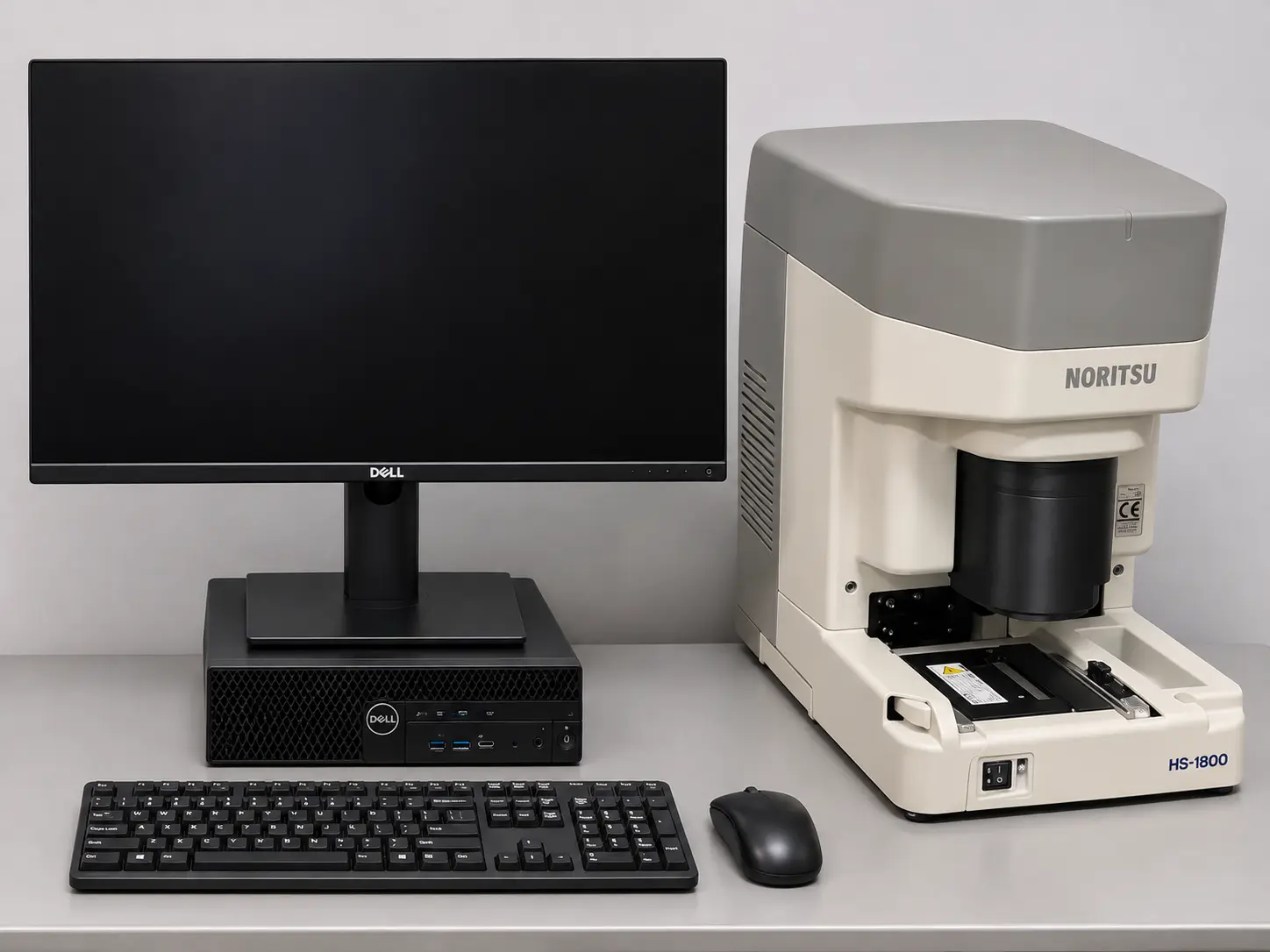
Noritsu HS-1800 scanning, in our own St. Louis lab
Negative Scanning
Film does not wait. Color shifts, bases warp, emulsions stick. We scan 35mm, 120, 220, 126 and APS on a Noritsu HS-1800, color correct every frame by eye, and send your negatives back to you sleeved. $15 a roll, flat, in our own St. Louis lab. Nothing leaves the building.
Printing for photographers, studios and families in St. Louis since 1976. 2050 Congressional Dr. Drop off in person or mail it in.
Why now
Every year the film sits in the box, it gets harder to save
Negatives and slides are chemistry, not files. They keep reacting to heat, damp and light long after the picture was taken. The images are all still there today. Some of them will not be in ten years, and no scan will bring back what has already gone.
What we scan
Five film formats, color, black and white or slide
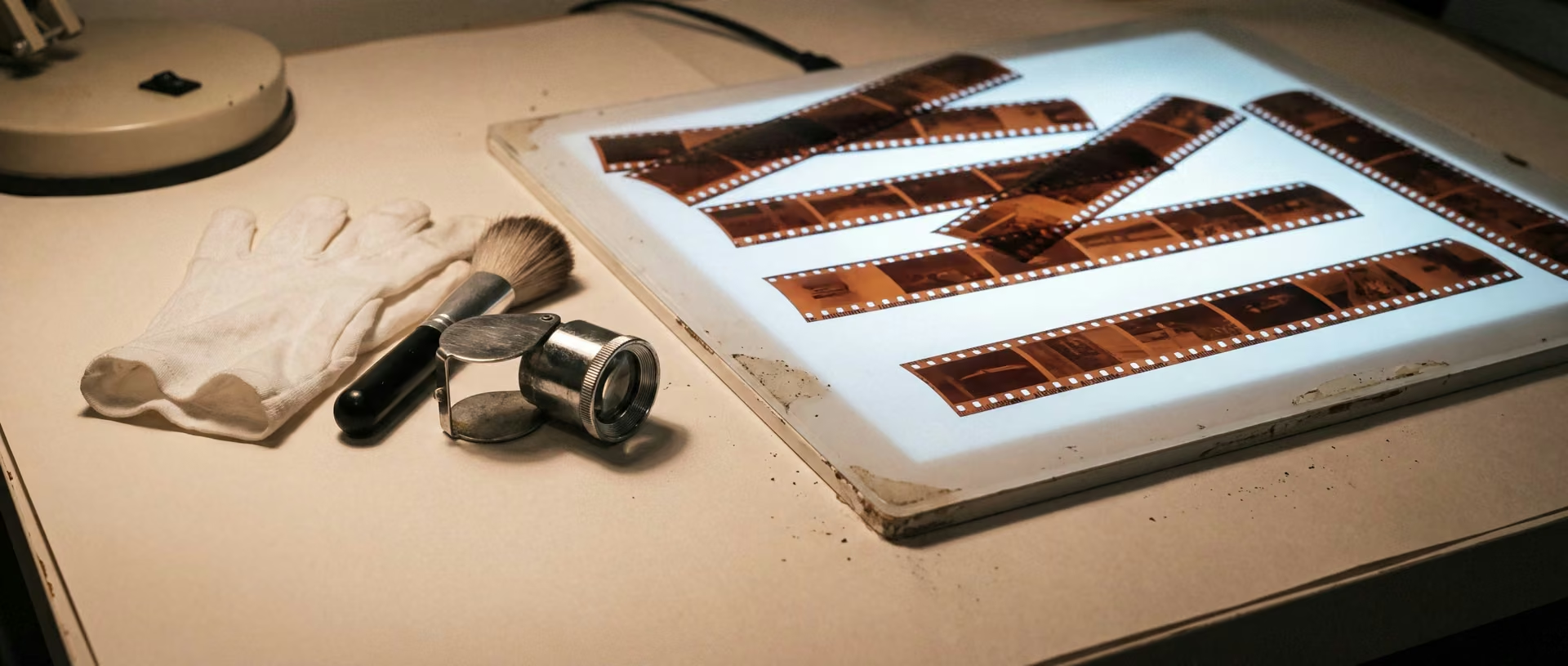
If it came out of a camera on a roll, there is a good chance we can scan it. Send strips, uncut rolls or whole shoeboxes. If you are not sure what you have, photograph the edge of a strip and send it to us, we will identify it for you.
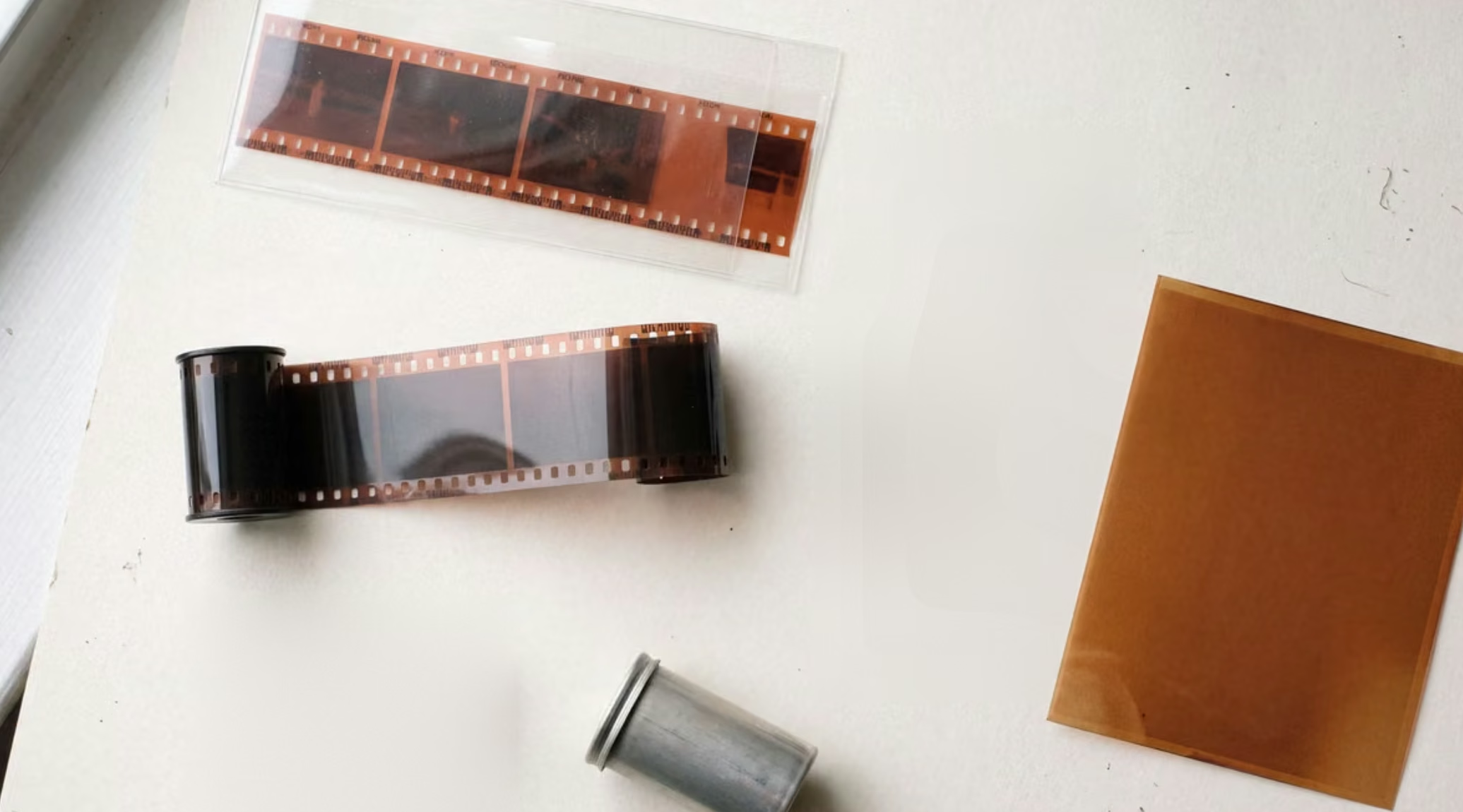
We cannot scan 110 film. Mounted slides, 127, disc film and sheet film are not run on this scanner either. If that is what you have, call us before you send it and we will tell you honestly whether we can help or point you somewhere that can.
Scan sizes and price
$15 a roll. Four resolutions, all the same price
One flat rate per roll for scanning film you already have developed, whichever resolution you choose. Every frame on the roll is scanned, color corrected and cropped square to the frame edge. The only thing that changes between the four options is how much detail is captured, and therefore how big you can print and how far you can crop later.
| Option | 35mm output | File size | Prints to | Choose it for |
|---|---|---|---|---|
| Standard JPEG | 1200 x 1800 px 2.2 MP | about 1 MB | 4x6 | Seeing what is on the roll. Sharing, phones and web galleries, and scanning a large archive without filling a drive. |
| High Resolution JPEG | 2400 x 3600 px 8.6 MP | 2 to 5 MB | 8x12 | Reprints, albums and everyday enlargements. The choice most people should make. |
| Ultra Resolution JPEG | 3600 x 5400 px 19.4 MP | 10 to 14 MB | 12x18 | Everything the scanner can pull off the frame. Wall art, cropping, and film you only want to scan once. |
| Ultra Resolution 16 bit TIFF | 3600 x 5400 px 19.4 MP | 10 to 14 MB | 12x18 | The same capture, uncompressed and in 16 bit, for retouching and restoration work. |
Color corrected by a person
Density and color are judged frame by frame on a calibrated display, not left to an auto setting. This is the part a home scanner and a phone attachment cannot do.
Dust and scratch removal
Infrared dust and scratch removal is applied to color negative and E-6 slide film. It cannot be used on conventional black and white or Kodachrome, where the silver and the dye layers read the same as dust to the infrared channel. Those are cleaned by hand instead.
Not sure which to pick?
If you just want to see what is on the roll, take Standard. If you will reprint from it, take High Resolution. If a frame might end up on a wall, or the film is irreplaceable, take Ultra and scan it once, properly.
What you get back
Files you can use, and your film, sleeved
A scanning job is not finished when the scanner stops. It is finished when the files are organized the way your film was organized, and the originals are back in your hands in better condition than they arrived.
How it works
Four steps, one building
Drop your film at the counter or mail it to us. Everything after that happens at 2050 Congressional Dr.
Drop off
Fill in the order form on this page, print it and bring it with your film, or mail both to us. Your film is logged, bagged and given a job number the moment it arrives.
Clean and inspect
Every strip is checked for damage, mold and curl, and cleaned of surface dust before it goes near the scanner. If something cannot be scanned safely, we call you before we touch it.
Scan and correct
Film runs on the Noritsu HS-1800 at your chosen resolution. Density and color are set frame by frame by an operator, not by an auto button.
Deliver and return
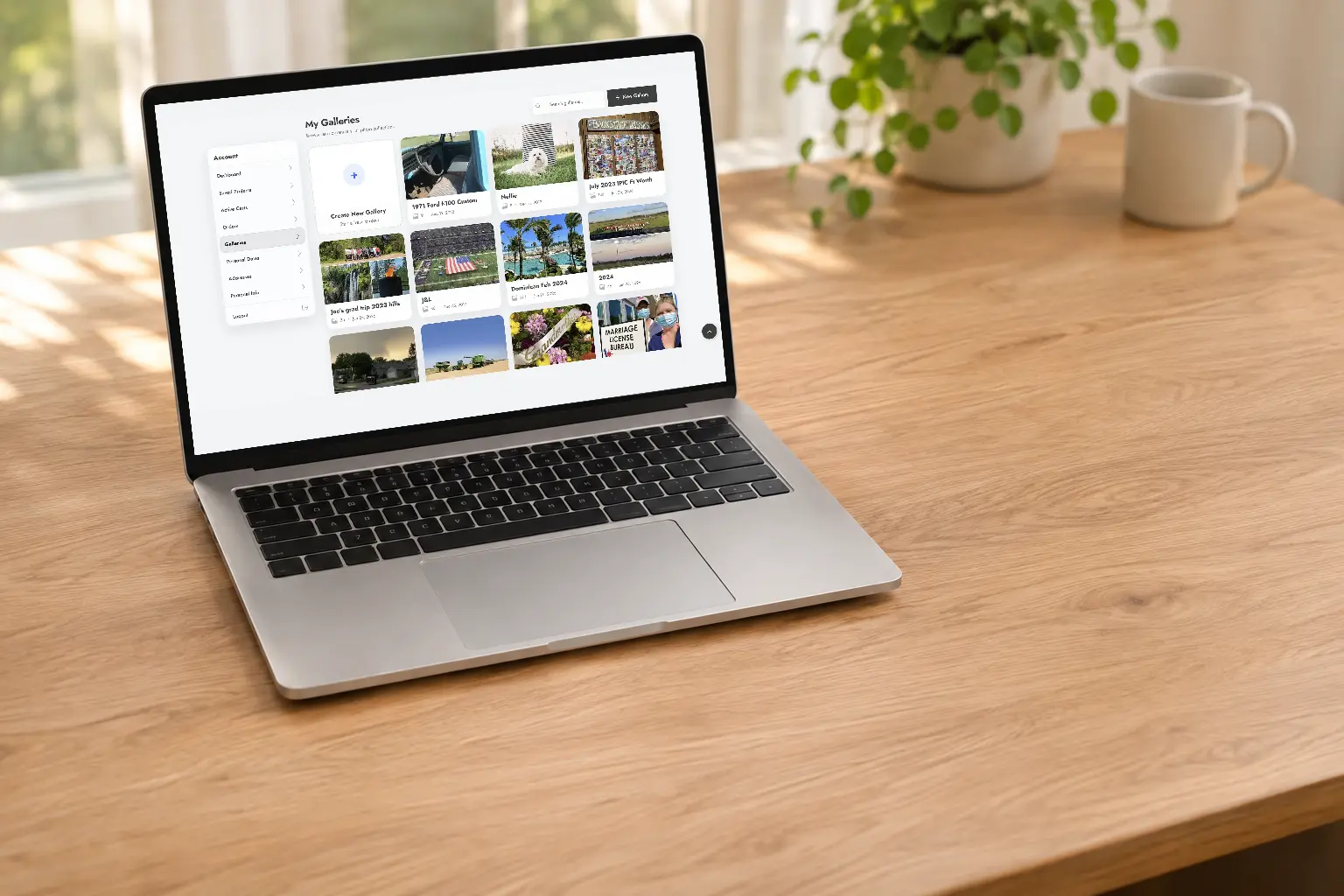
Your scans go to your Diversified Prints account gallery, or onto a USB drive for $10, one folder per roll. Your negatives come back uncut, rolled and sleeved. Pick them up at the counter, or have them shipped to you for a shipping fee.
Prepare your order
Price it up, print it, and drop off takes two minutes
Tell us what you have and how you want it back, and the form prices it as you go. Print it, put it in the bag with your film and hand it over the counter, or mail both to us. We confirm the count and the price when the film is booked in, and nothing is charged until you approve it.
Your order
- Film
- Nothing selected yet
- Scanning
- —
- USB drive
- —
Estimated total$0.00
An estimate, not a quote. We count the rolls when the film is booked in and confirm the price with you before anything is scanned. Prints, rush handling and film in poor condition are quoted separately.
Copy the summary, then paste it into the contact form. We reply the same business day, Monday to Friday. Pay at the counter when you drop off, or tick the prepay box and we will send a payment link.
Who sends us film
Two very different boxes arrive at our counter
Half of our scanning work is a photographer digitizing a career. The other half is a family working out what is in a relative’s cupboard. Both get the same scanner and the same operator.
Photographers and studios
Back catalogue from the film years, client archives that still get reprint requests, and personal work that has never been seen at size. High resolution scans, TIFF on request, and the same lab that will print them afterwards.
Families and estates
Shoeboxes, tins, envelopes marked with a year and nothing else. We sort, scan and hand the whole thing back organized, with files anyone in the family can open.
Businesses and institutions
Company records, school and sports archives, local history collections. Consistent file naming, folder structures that match your own, and a single point of contact through the job.
Anyone who found a roll
Undeveloped film in a drawer, a camera bought at an estate sale, one roll you have wondered about for years. Bring it in. One roll is a perfectly normal order.
Before you send it
What we will tell you up front
A scan is only as good as the film it came from. We would rather say so before we take your money than after.
Ask us about your filmDo not try to clean it yourself
No water, no alcohol, no cloth. Cleaning film at home scratches it permanently. Bring it as it is, dust and all. Cleaning is part of the job.
Leave stuck strips stuck
If damp has welded strips together, pulling them apart tears the emulsion off. Bring the block as it is and we will assess it before anything is separated.
Faded is not always fixable
We correct color shifts as far as the remaining dye allows. Where a layer has gone, it has gone. We will show you a test frame before scanning a whole archive.
Keep the order you found it in
Envelopes, elastic bands, handwriting on the sleeve, all of it is information. Do not tidy it up. We will scan it in the order you hand it over and give it back the same way.
In their words
Why people trust us with the originals
Diversified has been printing for photographers, studios and families since 1976. These are customers of the lab, not of the scanning service, which is new.
“I just wanted to thank you again for the great job Diversified did on the historical photos for my client in Pittsburgh. My client is VERY happy!”
Art Director, Portland, OR
“THIS is why I love doing business with you and with Diversified. I recommend you to everyone that inquires on where to have prints done, even from out of state!”
Fine Art Photographer, St. Charles, MO
“I discovered Diversified years ago as a rank rookie. They held my hand when I needed it, and I observe them still providing the same quality service to other customers.”
Photographer
Questions
Negative scanning, answered
What does negative scanning actually do?
It turns a photographic negative, slide or transparency into a digital image file. The film is held flat, lit from behind and captured by a scanner, then the tones are inverted and the color and density are corrected so the file looks like the photograph rather than the negative. What you get back is a JPEG or TIFF you can view, share, edit and print.
Which film formats do you scan?
35mm, 120, 220, 126 and APS, in color negative, black and white or E-6 slide film. Mounted slides, 110, 127, disc and sheet film are not run on our scanner, so call us first if that is what you have.
What scanner do you use?
A Noritsu HS-1800, the high speed film scanner professional film labs run. It captures in 16 bit through an LED light source and outputs up to 3600 x 5400 pixels from a 35mm frame. It lives in our building in St. Louis and is operated by our own staff.
How big can I print from a scan?
At 300 dpi with no upscaling, a Standard scan (1200 x 1800) prints to 4x6, a High Resolution scan (2400 x 3600) prints to 8x12, and an Ultra Resolution scan (3600 x 5400) prints to 12x18. Because all four resolutions cost the same $15 a roll, there is no reason to take Standard for film you care about. If a frame might end up on a wall, take Ultra.
Do you remove dust and scratches?
Every strip is cleaned of surface dust before it is scanned. On color negative and E-6 slide film we also apply infrared dust and scratch removal during the scan. That technique cannot be used on conventional black and white or on Kodachrome, because the silver in the emulsion and Kodachrome’s cyan layer both read the same as dust to the infrared channel. Those films are cleaned by hand instead.
Will my colors be corrected?
Yes. Density and color are set frame by frame by an operator on a calibrated display, not left to an automatic setting. Where film has faded we correct as far as the remaining dye allows and tell you honestly what could not be recovered.
Do I get my negatives back?
Always. Your film is returned in fresh archival sleeves, in the order you gave it to us, either at the counter or by mail. We do not keep, license or resell customer originals.
How do I get the files?
Your scans are delivered to your Diversified Prints account gallery, included in the $15 a roll. If you would rather have them on a USB drive you collect with your film, that is an extra $10. Files are organized into folders that match your rolls or envelopes so you can still tell one set from another. There is no app, no subscription and no paywall to get at your own images.
How much does negative scanning cost?
$15 per roll, flat. That is the same price whichever of the four resolutions you choose, Standard, High, Ultra or Ultra TIFF, and it covers every frame on the roll plus delivery to your account gallery. A USB drive is an extra $10 if you want one. Use the order form on this page to price your own order. Film in poor condition, prints and rush handling are quoted separately, and we always confirm the count and the price with you before anything is scanned.
Can I pay before I drop off?
If you would like to. Tick the prepay box on the order form and we will send you a payment link once the price is confirmed. Otherwise payment is taken when you drop the film off at the counter.
Can I mail my film in?
Yes. Print the drop-off form from this page, put it in the package with your film and send it to Diversified Prints, 2050 Congressional Dr, St. Louis, MO 63146. Pack the film so it cannot move, use a trackable service, and tell us it is on the way so we can watch for it.
Do you develop film as well as scan it?
Yes, but it is a separate service. The $15 a roll on this page is for scanning film that has already been developed. If you have film rolls that have never been developed, start your order online on our film developing page, or just stop by.
Can you print from the scans?
Yes. Once your film is scanned, you can order prints of any frame on Fuji Crystal Archive paper, or turn your favorites into metal prints, canvas wraps or a layflat album. Everything is made here at 2050 Congressional Dr.
Get a scanning quote
Tell us what is in the box and we will get it scanned
$15 a roll, flat, whichever resolution you pick. A rough count and the format is enough to start. We will come back with a turnaround and an honest view of what the film can give you, before anything is scanned.
Monday to Friday, 9:00am to 5:00pm CT